


|
| As and from Monday 28 October, Transport for London (TfL) has strengthened the requirements for its world-leading Direct Vision Standard (DVS), which is playing a vital role in helping to save the lives of vulnerable road users in the capital. DVS measures how much an HGV driver can see directly through their cab windows and sets minimum standards, to promote visibility and safe driving practices. TfL is now strengthening the minimum safety requirements for vehicles in the capital to reduce the level of risk that HGVs can pose to all road users, especially people walking and cycling.
HGVs over 12 tonnes will now require a minimum three-star DVS rating or to fit an updated system of enhanced safety features – the Progressive Safe System (PSS) – to operate in Greater London. Operators will receive a penalty charge notice of up to £550 if they operate an HGV over 12 tonnes in Greater London without a valid HGV safety permit, or do not meet the permit conditions. TfL has introduced these changes to further enhance the safety standards of HGVs operating in the capital, helping them to reduce road danger for everyone. The DVS and HGV Safety Permit Scheme is a key part of the Mayor of London’s Vision Zero plan to eliminate all deaths and serious injuries on London’s transport network, and this next phase of the scheme harnesses new technology to make London’s roads safer. The PSS has been designed specifically to eliminate the most common causes of fatal collisions between an HGV and those who walk and cycle where vision is a factor, such as when a vehicle moves off from stationary or is turning left.
TfL data shows that the DVS is already saving the lives of vulnerable road users. In 2023, there was a 62 per cent reduction in the number of fatal collisions involving an HGV, compared to the 2017-19 baseline, as well as reductions in serious injuries. However, more work is needed to keep Londoners safe. Six people were killed and 32 people were seriously injured in collisions involving HGVs in 2023, with devastating consequences for families, friends and communities. The capital’s DVS is a world first and is having an impact across the UK and EU. The work TfL has undertaken with manufacturers has already seen the EU incorporate direct vision into safety standards. The European Commission expects that this, along with other safety measures being introduced, will save an estimated 25,000 lives by 2038*. Walking and Cycling Commissioner, Will Norman, said: “London’s world-leading Direct Vision Standard is helping to significantly improve lorry safety in the capital and is already saving the lives of vulnerable road users. However, every death and serious injury on our roads is one too many, which is why we are working with London Councils and industry to further strengthen the Direct Vision Standard to ensure lorries operating on London’s roads are even safer. “I’m immensely proud of our Direct Vision Standard, which is a major step forward in the Mayor’s Vision Zero plan to eliminate all deaths and serious injuries from London’s roads by 2041.” Christina Calderato, TfL’s Director of Strategy, said: “Since we introduced London’s pioneering Direct Vision Standard, we have seen a significant reduction in fatal collisions where vision is a factor in the capital. However, there is much more we need to do, to achieve our goal of eradicating deaths and serious injuries from London’s transport network. It’s vital that all vehicles using London’s roads have safety at the forefront of their design and we’re excited that from today HGVs operating in the capital will become even safer. We’d also like to thank the freight industry for their work helping to ensure that vehicles fit the new safety requirements.” Andrew Cox, Managing Director, FM Conway, said: “As a key infrastructure services provider across London, our vehicles spend a lot of time on the capital’s streets. The bigger the vehicle, the bigger the challenge is to establish clear visibility for drivers to prevent collisions and accidents. “TfL’s DVS and its latest Progressive Safe System update, makes sure the largest vehicles operating on the network can do so safely, with driver and technology working in tandem to pre-emptively predict and avoid incidents. “Health and safety should be a core value for any HGV operator, and TfL with their Vision Zero strategy are making sure that we are making the capital a safer place.” Cllr Kieron Williams, London Councils’ Executive Member for Climate, Transport and Environment, said: “London boroughs have backed this change unanimously because it will save lives. Deaths involving heavy goods vehicles have reduced by 62 per cent in 2023, directly because of Direct Vision Standard, which is a huge step forwards for our city. This further rise in safety standards will save even more lives.” 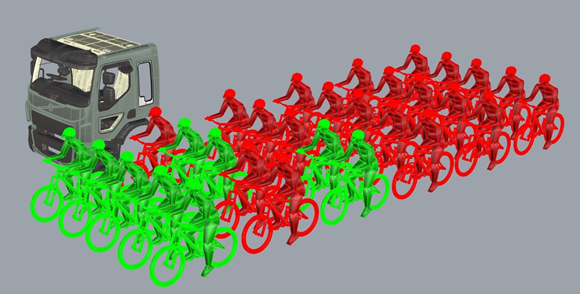 TfL’s DVS has been developed in close consultation with the freight industry and vehicle manufacturers. The current Safe System of additional safety measures was developed and consulted on in 2018, and reviewed by TfL in 2022 to reflect new equipment and technologies available on the market. TfL consulted operators, manufacturers, suppliers, road user safety groups, industry and other stakeholders on its PSS proposals between 14 February and 3 April 2023. The consultation showed an encouraging level of support (more than 55 per cent) for the principles of DVS, the HGV Safety Permit Scheme and the principles underpinning the PSS. TfL has also worked closely with the freight industry to monitor hauliers’ readiness to fit PSS measures ahead of the new requirements coming in. In order to give the industry sufficient time to buy, fit, and test any new safety equipment in line with the new PSS, operators were able to apply for a six-month grace period before the standards were tightened this week. |
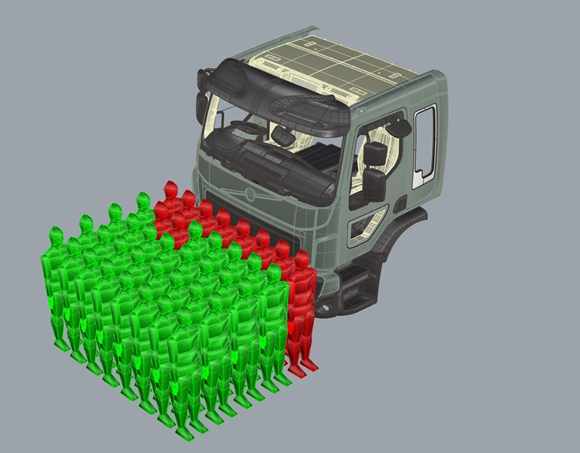
Logistics UK and the RHA (Road Haulage Association) – have issued an urgent reminder to businesses to check whether their vehicles require a permit in order to continue operating in the capital.
From 28 October, those operating HGVs over 12 tonnes in London will need to demonstrate their vehicles have a three star safety rating, as specified by Transport for London, or fit the Progressive Safe System (PSS). Failure to meet either criteria will mean businesses risk receiving a £550 penalty charge notice and be unable to continue operating in the capital.
If installation works for the PSS cannot be undertaken until after enforcement begins, operators can apply for more time to allow work to be booked, but this must be scheduled before the enforcement period begins on 28 October 2024. No applications will be considered after 23.59 on 27 October. Full information about the scheme, including details of the technical specifications of the new standards, can be found on the dedicated TfL website. This page also contains contact information for operators to speak directly with the DVS enforcement team. To apply for the DVS grace period (after 28 October 2024 and before 4 May 2025) in cases where works are due to take place after enforcement begins please use the DVS enquiry form.
“With 216,000 vehicles in scope of the new DVS phase two regulations, operators need to ensure their vehicles are compliant ahead of the 28 October deadline,” the organisations said. “TFL has been clear from the outset that there will be leeway on the deadline for implementation, so it is up to operators to ensure they have installation works scheduled and, if necessary, have applied for the grace period in plenty of time, to ensure the sector can continue to deliver for London, its businesses and its consumers.”