

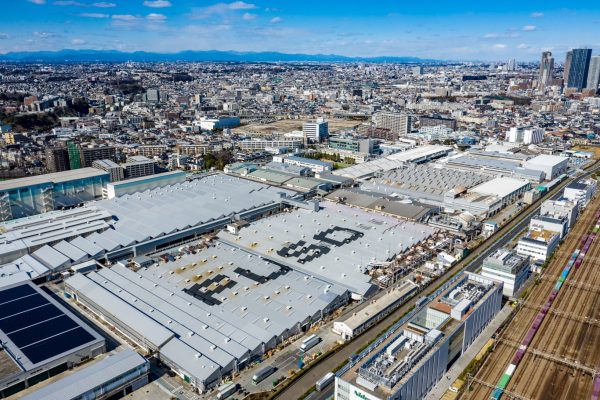
• Kawasaki and Nakatsu Plants certified
• Certification contributes to optimized energy efficiency and international competitiveness of the company
• Company aiming to achieve carbon neutrality of all production sites within 2025
Mitsubishi Fuso Truck and Bus Corporation’s Kawasaki (Kawasaki City, Kanagawa Prefecture) and Nakatsu plants (Aikawa Town, Kanagawa Prefecture) have achieved certification of ISO50001:2018, an international standard for energy management systems.
Energy management systems lead to the reduction of energy consumption and costs. They also involve continuous improvement, reducing carbon dioxide (CO2) emissions and environmental impact.
ISO50001, set by the International Organization for Standardization (ISO), specifies the requirements for establishing energy management systems that monitor and continuously optimize companies’ energy usage. As decarbonization efforts become an urgent issue for companies, ISO50001 is being used in many countries, particularly in Europe, along with the international standard ISO14001 for environmental management systems.
Acquiring ISO50001 certification contributes to efficient and systematic implementation of an energy management system, and adds credibility to the company’s energy management system while increasing its international competitiveness through certification by an external organization.
MFTBC has undergone a third-party audit by Bureau Veritas Japan Co., Ltd. and received this ISO50001 certification. The certification applies to both manufacturing sites and the head office and development functions within the Kawasaki Plant. Daimler Truck, MFTBC’s parent company, aims to obtain ISO50001 certification for all group manufacturing sites by the end of 2025.
MFTBC obtained ISO14001, an international certification for environmental management systems, in 1999. Going forward, by steadily implementing the requirements of both ISO14001 and ISO50001, MFTBC aims to achieve its goal of making all domestic manufacturing sites substantially carbon neutral by the end of 2025, and intends to improve the sustainability of its manufacturing sites thereafter.