

*MPI – a coalition of leading transport providers – proposes new Sustainable Travel Wallet
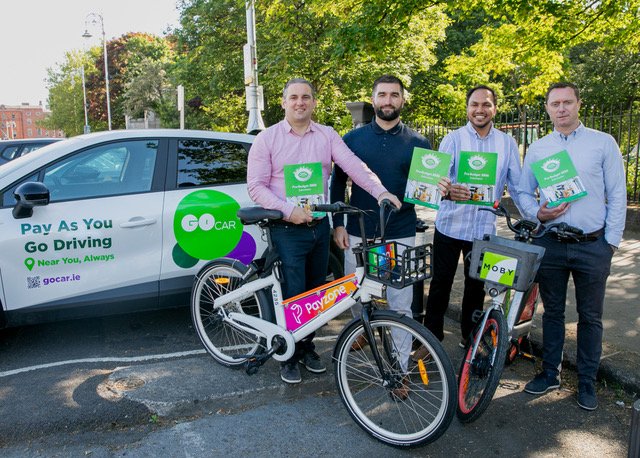
Mobility Partnership Ireland (MPI), a coalition of leading shared transport operators, is urging the Government to support greater flexibility and choice for commuters in Budget 2026 through a series of targeted measures designed at incentivizing more take-up of sustainable travel option and to speed-up decarbonisation of the Irish transport sector. MPI has launched their pre-budget submission ahead of Budget 2026.
MPI are proposing the introduction of a new tax-free Sustainable Travel Wallet, a flexible, digital scheme that would allow employees to access a tax-free allowance of up to €100 per month for use on a range of sustainable transport options. The wallet would cover new transport options services such as bike share, car share, and short-term rentals, and taxi, while also allowing commuter to top -up their Leap card.
Unlike the current TaxSaver offering, which focuses narrowly on rail, bus and Luas travel, the wallet would broaden access to greener transport and provide greater flexibility to commuters, reflecting how people actually move in and around cities and towns. According to Census 2022, just 240,000 people commuted by bus, rail, Luas or bike, compared to over 1.2 million who drove their own car. By enabling a wider range of sustainable options to benefit from tax relief, the Government can support a much larger segment of the population to make lower-carbon travel choices.
Hugh Cooney, Chair of Mobility Partnership Ireland (MPI), commented on the Sustainable Travel Wallet: “Policy measures aimed at encouraging people to avoid single occupancy car trips should consider the needs of both urban and rural dwellers. A tax-free Travel Wallet would give commuters the freedom to choose lower-emission options that work for them. Commuters just want the flexibility to pick what works best for them – choosing a bike share scheme one day, coach transport the next, or a short-term rental for the weekend.”
Additional measures proposed by MPI include:
- Reducing the VAT rate on short-term bike and car rentals from 13.5% to 9%, making these services more affordable and encouraging uptake, especially in urban areas.
- Expanding zero-emission vehicle (EV) grants for commercial bus, taxi, and rental fleets, including a new Zero-Emission Bus (ZE-Bus) Grant Scheme, a doubling of the eSPSV Scheme for taxis, and a new pilot grant scheme for the purchase of EV rental and car-sharing fleets.
The MPI proposals to expand zero-emission vehicle (EV) grants for commercial bus, taxi, and rental fleets would allow Ireland to get ahead of EU calls to decarbonise corporate fleets and address demand from commercial providers including taxi and bus operators:
- The 2025 e-SPSV scheme for taxis was fully subscribed within a month. Funding provided in 2025 is less than the total value of grants issued in 2024; and number of applications in 2025 is more than double the number of grants approved in 2024,
- Private bus operators who have limited access to VAT refunds on EV buses. In 2024, there was only one new privately-owned EV bus registered in the state, as opposed to 556 fossil fuel-powered buses highlighting a clear market failure.
MPI believe the proposals in their pre-budget submission will help the Government to deliver on targets set out by the Government’s Climate Action Plan, noting that greenhouse gas emissions from Ireland’s transport sector actually increased in 2023.
Cooney concluded: “There is untapped potential to make Ireland’s transport offering more sustainable and accessible. These are practical, costed solutions that can drive real behavioural change and help Ireland meet its ambitious climate targets.”