Karsan, which plays a pioneering role in the electrification and autonomous transformation of public transportation worldwide, especially in Europe, continues to set new industry standards.
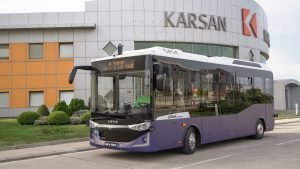
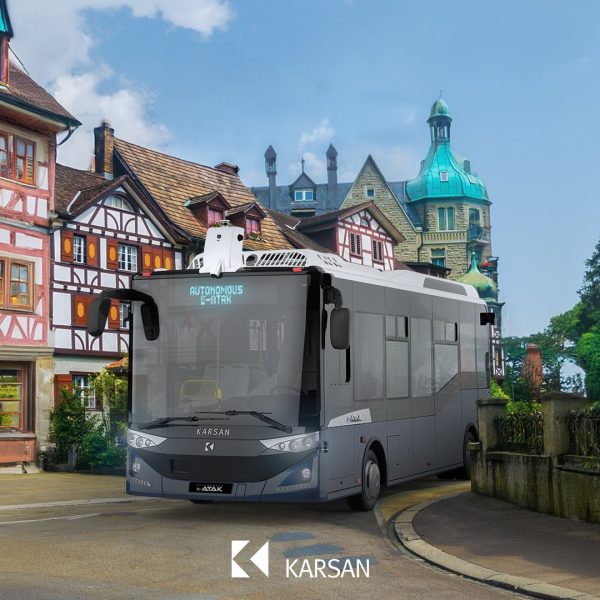
Developed in collaboration with ADASTEC, the Karsan Autonomous e-ATAK, the world’s first Level-4 driverless vehicle on a planned route, is now bringing a new era of comfortable and eco-friendly transport to Switzerland after its successful operations in the USA, Norway, Romania, the Netherlands, Türkiye, France and Finland.
The Autonomous e-ATAK, which will serve on a 2.2-kilometer route with 8 stops between the historic city center of Arbon and the new residential area Saurer Werk 2, at a speed of 30 kilometers per hour, will be Switzerland’s first automated bus.
Emphasizing that the Autonomous e-ATAK, which provides autonomous public transportation services within the city for the first time in Europe, has also achieved the significant milestone of being the first driverless vehicle to pass through a tunnel, Karsan CEO Okan Baş stated, “Our vehicle offers a comfortable and eco-friendly autonomous travel experience without disrupting the historic texture of Arbon’s narrow streets, thanks to its compact structure. We are proud to take on a pioneering role in Switzerland’s transition to driverless public transport with our Autonomous e-ATAK, which will provide passenger transport services in autonomous mode on a 2.2-kilometer public transport route. In the Swiss market, where we initially entered with our Jest vehicle, we aim to further solidify our presence with the delivery of 23 electric vehicles to one of the country’s largest operators in August and September.”
ADASTEC CEO Dr. Ali Peker, highlighting that this success is the result of the shared vision with Karsan, said, “With the operation we carried out in Stavanger, we achieved a first in Europe, and in the USA, we deployed America’s first automated bus at Michigan State University. These projects have not only automated public transport systems but also marked significant steps towards a smarter, more connected, and sustainable future. With this strong collaboration, we continue to lead innovation in public transport.”